

Introduction
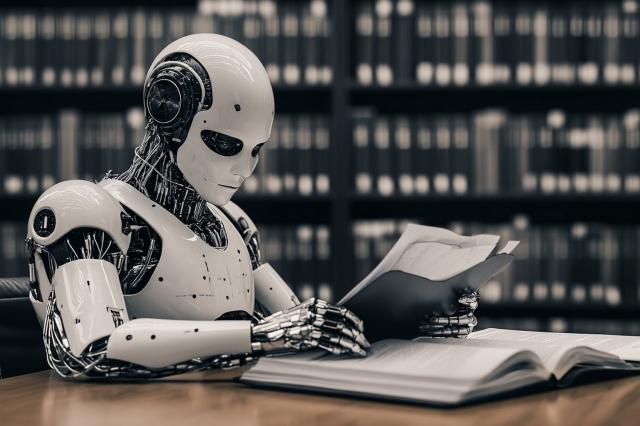
Peer review has long been at the heart of academic growth. Whether it's a classmate checking an essay draft, a professor offering feedback, or a journal reviewer evaluating a research paper, feedback helps refine ideas and sharpen arguments. But with the rise of artificial intelligence, students now have a new option: AI as the first peer reviewer.
This possibility is exciting; but also raises important questions. Can AI genuinely provide useful feedback? Does it help students improve, or risk making them too dependent? And how should students balance the convenience of instant AI feedback with the depth of human critique?
In this blog, we'll explore how AI is transforming the peer review process, the risks of overreliance, and the smart ways students can use it to support—not replace; their own learning.
The Traditional Role of Peer Review
Before diving into AI, it's worth remembering what peer review really is. At its core, it's about constructive criticism. A good reviewer highlights strengths, points out weaknesses, and suggests improvements. For students, this process serves multiple purposes:
-
It gives them an external perspective on their writing.
-
It reveals gaps in reasoning or evidence.
-
It helps them build the confidence to revise and improve.
Traditionally, students might swap essays with a classmate or ask for feedback from a teaching assistant. In research, journal articles undergo formal peer review by experts. Both cases rely on human judgment, something AI can mimic but not fully replace.
AI as the Early Feedback Partner
The biggest advantage of using AI as a “first reviewer” is speed. Students no longer need to wait for a professor's office hours or a peer's availability. By pasting a draft into an AI tool, they can instantly get suggestions on structure, grammar, and even argument flow.
This kind of early feedback can be a huge confidence booster. Instead of handing in a messy first draft, students can polish their work beforehand. Think of it as showing up to a peer review session already having cleaned up the easy mistakes.
For example, a student writing a history essay might ask AI to check whether their thesis statement is clear or if their paragraphs flow logically. The AI can point out redundancy, grammatical errors, or places where transitions feel weak.
But here's the key: AI should never be the only reviewer. While it's excellent at spotting surface-level issues, it lacks the deep contextual judgment of a professor or human peer.
Spotting the Citation Problem Early
One of the most troubling issues with AI-generated text is the fabrication of references. Some tools produce citations that look real but don't exist. When students use AI to add references, they risk submitting misinformation.
This is where AI-as-reviewer can be dangerous. A tool might suggest “support your argument with sources,” but if the student relies on AI to invent them, they could end up in academic misconduct territory.
Instead, AI should be used to improve the sources students already have. For example:
-
A paraphrasing tool can help students reframe quotes and references into original wording while maintaining accuracy.
-
Platforms like MyEssayWriter.ai guide students through structuring essays ethically, focusing on organization and clarity rather than fabricated references.
By combining these tools with careful manual fact-checking, students can ensure their arguments remain strong and evidence-based.
Making Drafts Easier to Read
Even the best ideas fall flat if they're buried under unclear writing. Professors often stress that essays need not just solid content but also readability.
Here's where AI shines: tools can analyze sentence length, complexity, and flow to suggest revisions that make writing more approachable. Running a draft through a readability checker before submission helps ensure the essay is polished and professional.
For students who struggle with English as a second language, this can be especially empowering. Instead of worrying about fluency, they can focus on the ideas themselves.
Beyond Drafts: Communicating With Reviewers
Peer review isn't only about writing essays—it also involves communication. Students often need to email professors, supervisors, or even classmates about feedback. A poorly written email can create confusion or seem unprofessional.
Here, an AI email writer can be surprisingly helpful. By suggesting polite phrasing and clear structure, it ensures that students communicate their questions respectfully. For example, a student unsure about how to ask a professor to clarify a source can draft a professional message in seconds.
This might seem like a small detail, but in academia, professional communication builds trust. Clear emails mean faster responses, better relationships, and stronger support networks.
The Benefits of AI as Peer Reviewer
When used responsibly, AI can provide several benefits as a first reviewer:
-
Instant feedback – Students don't have to wait days for a peer or professor to respond.
-
Confidence booster – Early corrections mean students hand in stronger drafts.
-
Accessibility – Non-native speakers or struggling writers can improve clarity before seeking human review.
-
Reduced workload for professors – If students self-correct basic issues, teachers can focus on deeper feedback.
These benefits make AI an excellent supplement to traditional peer review.
The Risks of Overreliance
However, overusing AI comes with risks that students need to be aware of:
-
Shallow feedback – AI can't critique the strength of an argument in context the way a human can.
-
Fabricated sources – As mentioned, some AI tools still generate false references.
-
Erosion of student voice – If students accept all AI suggestions blindly, their unique style may disappear.
-
Dependence on shortcuts – Relying too much on AI may prevent students from learning the revision skills they need long term.
This means students must approach AI critically, using it as a tool—not as a replacement for genuine thinking.
Balancing AI and Human Feedback
The ideal workflow looks something like this:
-
Draft your essay yourself → Gather real references, build your arguments.
-
Run an AI review for basics → Use tools for grammar, readability, and flow.
-
Refine with support tools → A paraphrasing tool for originality, a readability checker for clarity, and structured platforms like MyEssayWriter.ai for organization.
-
Seek human feedback → Share your polished draft with a professor, tutor, or peer for deeper critique.
-
Communicate professionally → Use an AI email writer if needed to draft polite requests for feedback or clarification.
By following this process, students get the best of both worlds: AI efficiency and human insight.
The Future of Peer Review in the AI Era
As AI continues to develop, its role in peer review will expand. Universities may start recommending AI tools as pre-review aids, professors might expect students to self-check before submission, and collaborative platforms could integrate AI feedback into peer review workflows. Many students even wonder, “can they write my essays in 2025?”—a question that shows just how quickly AI is becoming part of academic life.
However, one thing will remain constant: human judgment is irreplaceable. While AI can highlight surface issues, only a teacher or peer can truly understand nuance, originality, and depth of thought.
The smartest students won't see AI as competition to traditional peer review but as an assistant that prepares their work for more meaningful human critique.
Final Thoughts
So, can AI be the first peer reviewer? Absolutely—when used wisely. It can catch basic errors, improve readability, and give students the confidence to present stronger drafts. But it should never replace the feedback of real people.
The future of academic writing belongs to students who embrace both worlds: AI for quick improvements and humans for deeper insights. When approached this way, AI doesn't just make essays cleaner—it helps students become better writers, thinkers, and communicators.